About the webinar
Patients say yes to treatment every day, but many leave the practice without scheduling. When follow-up depends on someone having time to pull a report, work a list, or make a call, accepted treatment can sit unscheduled while revenue goes unrealized.
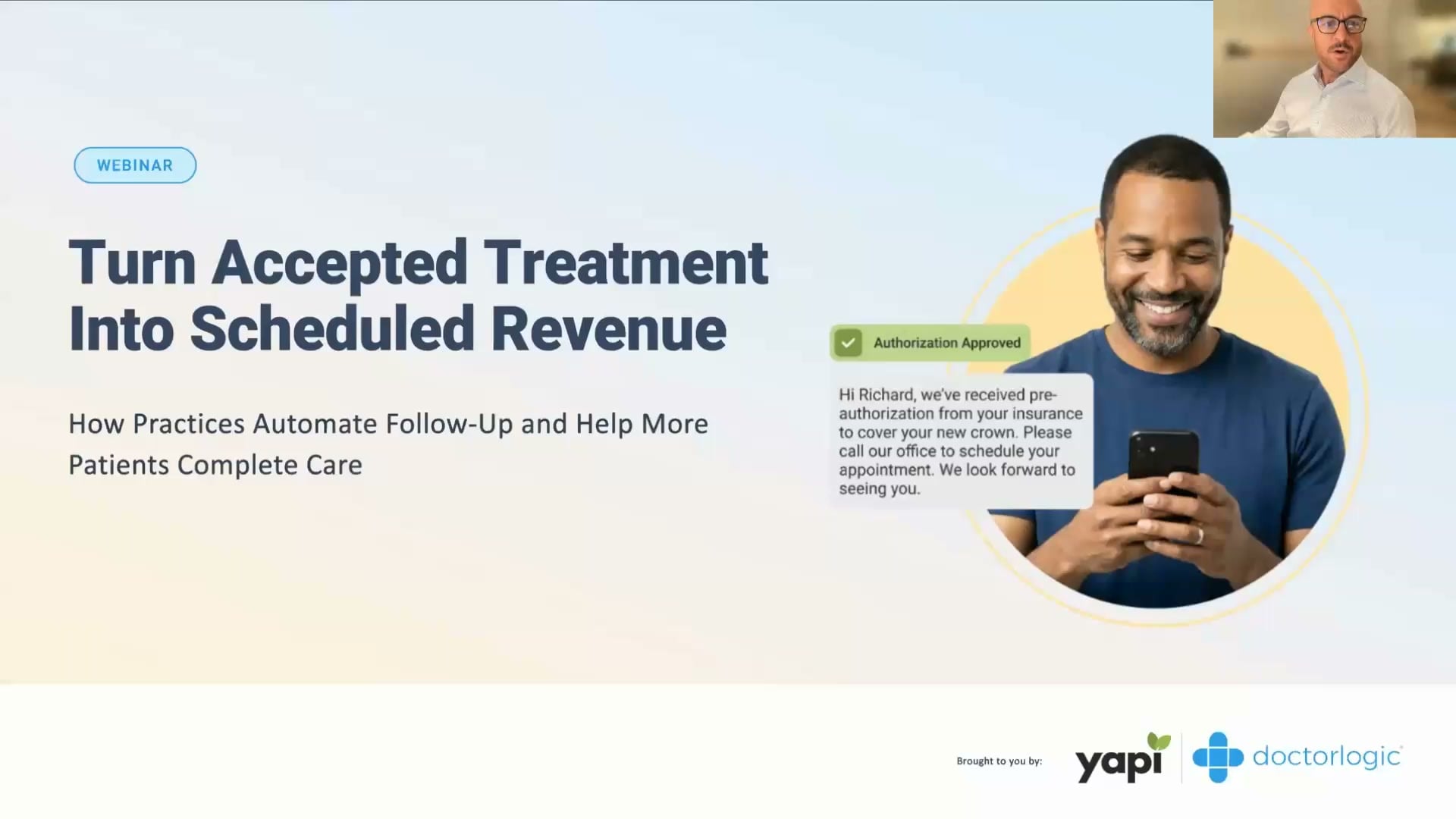
Yapi | DoctorLogic Treatment Plan Reminders helps practices close that gap by automating follow-up for accepted but unscheduled treatment. The result is a more consistent process for bringing patients back, improving treatment follow-through, reducing manual work, and helping more recommended care make it onto the schedule.
See How 7 Day Dental Captured $167,000 in Unscheduled Treatment
In this recorded session, Dr. Chuck Le, Founder and CEO of 7 Day Dental, shares how his team used Yapi Treatment Plan Reminders across six practices to reconnect with patients who had accepted treatment but never scheduled.
Within four weeks, 7 Day Dental captured more than $167,000 in treatment plan revenue from previously unscheduled treatment.
For Dr. Le, the impact was not just revenue. The workflow helped his team bring patients back for care they had already accepted, without adding more work for the front desk.
As Dr. Le shared during the session, patients are busy. They may understand the treatment, accept the recommendation, and still forget to book. A timely reminder gives them the nudge they need to move forward before treatment is delayed or becomes more urgent.
Why Treatment Follow-Up Breaks Down
Most practices already know there is opportunity sitting in unscheduled treatment. The challenge is consistency.
Your team may have a list to work, but the day gets busy. Patients are checking in, phones are ringing, appointments are changing, and follow-up often becomes one more task competing for attention.
That means some patients get called, some get texted, and others are missed entirely.
Treatment Plan Reminders creates a more reliable system by helping practices automate the follow-up process, so accepted treatment does not depend on manual tracking alone.
How Treatment Plan Reminders Work
Yapi Treatment Plan Reminders uses practice management system data to identify accepted but unscheduled treatment and automatically send reminders based on your practice’s configuration.
The workflow is designed to help the right patient receive the right reminder at the right time, without overwhelming the patient or adding more manual steps for the team.
Treatment Plan Reminders can help practices:
- Identify accepted but unscheduled treatment plans
- Send automated text reminders to patients
- Customize reminder timing and message templates
- Pause outreach when treatment is scheduled
- Respect exclusions, recent communications, and upcoming appointments
- Reduce manual follow-up for office teams and treatment coordinators
- Support a more consistent path from treatment acceptance to scheduled care
Built With Smart Eligibility and Practice Control
One of the biggest concerns with automation is whether patients will receive too many messages or receive the wrong message at the wrong time.
Treatment Plan Reminders is designed to avoid that.
Before a reminder is sent, Yapi checks the patient’s current status. If the patient has already scheduled, the reminder pauses. If the patient recently received a higher priority communication, the treatment reminder can wait. If the practice wants to exclude certain providers, procedures, insurance types, or treatment categories, those rules can be configured.
This gives practices automation without losing control.
Reduce Staff Work Without Losing Follow-Up
Treatment follow-up is important, but most teams do not have unlimited time to manage it manually.
In the webinar, Dr. Le explained that his team was not spending more time chasing treatment plans after implementing the workflow. Once the setup was complete, the reminders ran in the background and helped bring patients back without requiring the staff to constantly monitor lists or manually restart campaigns.
That is the core value of Treatment Plan Reminders: more consistent follow-up, less manual effort, and more accepted treatment moving toward the schedule.
A Better Experience for Patients and Practices
Treatment reminders are not just about revenue. They also help patients move forward with care they already accepted.
Patients may delay treatment because they forget, get busy, or need time to look at their schedule. A well-timed reminder can help them take action before the problem gets worse, becomes more expensive, or turns into an emergency.
For practices, this means better treatment follow-through, better schedule utilization, and more opportunity to capture revenue from care that has already been diagnosed.
What You’ll Learn in the Webinar
Watch the recorded webinar to hear Rachel Handschke, Chief Technology Officer at Yapi | DoctorLogic, walk through the technology and workflow behind Treatment Plan Reminders.
You’ll also hear directly from Dr. Chuck Le of 7 Day Dental about how his team used the functionality in the real world and the impact they saw across four practices.
The session covers:
- How Treatment Plan Reminders identifies accepted but unscheduled treatment
- How automated reminders help patients move from treatment acceptance to scheduled care
- How PMS-aware logic guides timing, eligibility, and follow-up
- How practices can customize templates, cadence, exclusions, and send rules
- How the workflow reduces manual work for office teams and treatment coordinators
- How 7 Day Dental captured more than $75,000 in previously unscheduled treatment revenue
- Best practices for improving treatment follow-up and patient communication
Ready to See How This Could Work for Your Practice?
Every practice has accepted treatment that never makes it onto the schedule. The opportunity is creating a consistent process to bring those patients back without adding more work for the team.
Yapi | DoctorLogic can help you evaluate your current treatment follow-up workflow and identify where Treatment Plan Reminders may help improve patient communication, reduce staff burden, and capture more accepted treatment.